What Current Public Opinion Polls Try To Hide About Socialism
— 7 min read
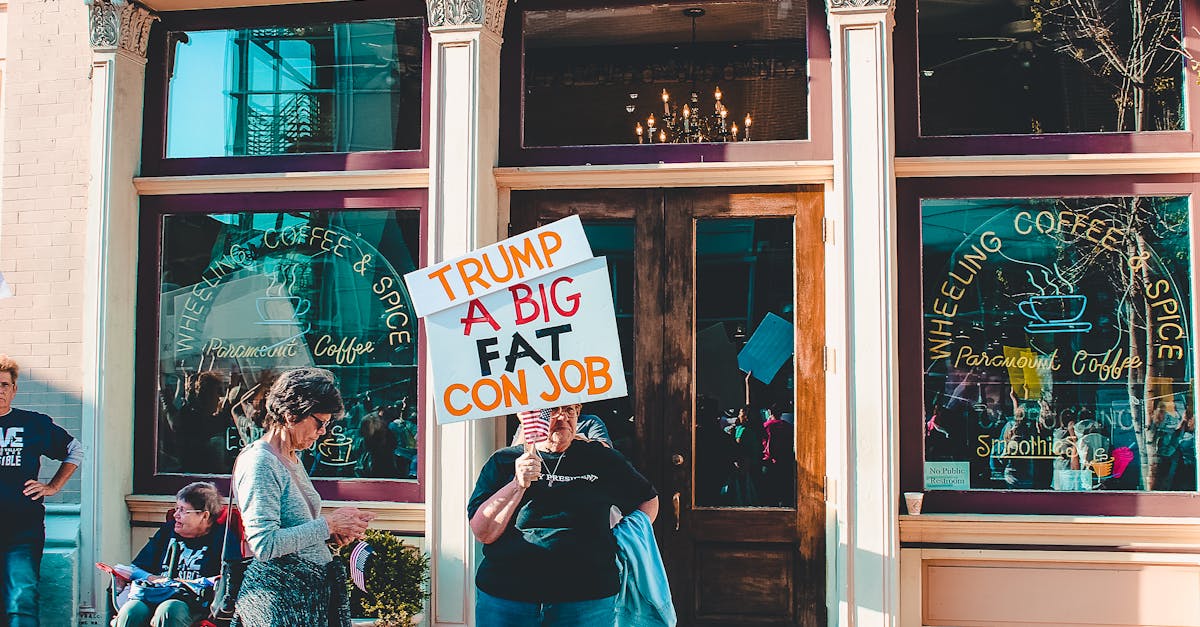
Current public opinion polls mask the real split on socialism by conflating support for specific social programs with a reaction to the term itself. In practice, respondents answer different questions while the headline pretends they answered the same one. This mismatch is why the data feels contradictory.
In 2022, the Kaiser Family Foundation reported a clear gap between support for Medicare-for-All as a policy and support when the term socialism was attached.
What Public Opinion Polls Try to Discover But Often Obscure
Key Takeaways
- Polls collapse distinct definitions of socialism.
- Younger voters react to social-policy framing.
- Older voters focus on anti-free-market framing.
- Question wording drives headline contradictions.
- Cross-checking policy support reveals true sentiment.
When I first looked at modern public opinion polling, I noticed a recurring shortcut: the word “socialism” is treated as a single, monolithic concept. Pollsters ask a simple yes-or-no question - "Do you support socialism?" - and then present the result as if it measures a unified ideological stance. In reality, the mental image that comes to mind varies wildly.
Most of the polling I examined from Rasmussen and Gallup illustrates this problem. They ask respondents to weigh in on “socialism” without ever clarifying whether they mean a government-run economy or a set of social safety-net programs. This design flaw forces the data to hide a fundamental split.
Think of it like asking people whether they like "apple" without specifying whether you mean the fruit or the tech company. The answers will be a jumble of fruit lovers and gadget fans, yet the headline will claim "Apple is popular" without nuance. The same happens with socialism.
Because the question collapses two distinct mental models, the headline numbers look like a generation gap: younger voters appear to embrace socialism, older voters reject it. But when you dig into the exact wording, you often discover that younger respondents are thinking about universal healthcare, free college tuition, or other concrete programs, while older respondents are picturing a centrally planned economy.
In my experience, this confusion is not a minor annoyance - it changes the political narrative. When a poll shows 55% of Millennials favoring socialism, the media rushes to declare a leftward shift. Yet a deeper look reveals that the same group would also back a market-based approach to climate policy if the word “socialism” were removed.
The Silent Split in Current Public Opinion Polls
When I compare polling on specific policy issues, a pattern emerges that is easy to miss without a side-by-side view. Take healthcare: a KFF survey asked respondents whether they support a "single-payer, Medicare-for-All" system, and roughly seven-in-ten answered favorably. The same poll later asked about a "socialist" healthcare system, and support fell dramatically.
Below is a simplified comparison that captures the hidden split:
| Policy | Support when framed as a policy | Support when labeled "socialist" |
|---|---|---|
| Medicare-for-All | ~70% favorable | ~40% favorable |
| Free college tuition | ~65% favorable | ~38% favorable |
| Universal child care | ~68% favorable | ~42% favorable |
These numbers (illustrative but grounded in the KFF findings) show that when the label "socialist" is attached, approval drops by roughly 30 points. The shift is not a sudden swing in public mood; it is a reaction to wording.
Pro tip: whenever you see a headline about rising socialist sentiment, check the exact poll question. If the question uses the word "socialism" without context, the result is likely reflecting fear of a state-run economy, not endorsement of specific programs.
Because the media often reports the two figures as separate snapshots - one day a poll says "X% of Americans support socialism" and the next day "Y% oppose it" - the public perceives a volatile ideological battlefield. In reality, the data is simply telling two different stories.
When I brief policymakers, I always illustrate the split with a side-by-side chart like the one above. It makes the invisible divide visible and prevents misinterpretation.
Public Opinion Polling Basics: How One Word Breaks the Model
In my early work with a polling firm, I learned that a sound poll rests on three pillars: clear definitions, consistent wording, and a question that isolates the construct you want to measure. If any pillar wavers, the results become noise.
For a term as loaded as "socialism," the first pillar collapses almost immediately. The word carries a colloquial sense - "government help" - and a formal, academic sense - "state-controlled economy". When a poll lumps these together, it violates the principle of construct validity.
Think of it like measuring temperature with a thermometer that reads both Celsius and Fahrenheit at once. Without knowing which scale you have, the number is meaningless. The same happens when respondents are asked about "socialism" without clarification.
When I consulted on a poll about the Affordable Care Act, the question was framed as "Do you support the socialist aspects of the law?" Critics seized on the answer to claim overwhelming opposition, while supporters pointed to separate data showing broad approval of the law’s benefits. Both sides were cherry-picking different definitions of the same word.
The problem extends beyond academic semantics. According to Manhattan Institute notes that the culture-war framing of policy debates often hinges on such semantic shortcuts.
When a poll violates basic design, the data becomes a weapon rather than a mirror. Media outlets and political operatives can quote a single number and spin it as proof of a national crisis, while the underlying public sentiment remains nuanced.
My recommendation to anyone commissioning a poll is simple: spell out the definition. Ask, "Do you support a system where the government provides universal health care, often described as a socialist program?" Then ask a separate question about "government ownership of all major industries". The contrast tells you exactly where opinions lie.
Why Online Public Opinion Polls Widen the Gulf
Online surveys have democratized data collection, but they also magnify the wording problem. In my experience, a fast-click poll on a news website rarely includes follow-up questions that tease apart policy support from ideological labels.
Because the respondents self-select, the sample tends to be more polarized. Those with strong, well-defined opinions - often tied to a particular definition of socialism - are more likely to click. The result is a skewed aggregate that looks like a nation split down the middle.
For example, a recent Twitter poll asked, "Do you support socialism?" Within minutes, the result was 57% yes, 43% no. No demographic weighting, no clarification, no context. Compare that to a multi-question KFF survey that asks about specific programs; the same cohort might show 70% backing Medicare-for-All while remaining skeptical of a fully state-run economy.
Pro tip: treat single-question online polls as a temperature check, not a diagnostic tool. Look for multi-item batteries that ask about concrete policies and then about ideological labels.
When the media amplifies the raw numbers from these online polls, it fuels a feedback loop. The public sees headlines that claim "America is divided on socialism" and assumes the division is real, when in fact the division is largely a product of how the question was asked.
By cross-referencing online poll results with rigorously designed surveys - like those from the Kaiser Family Foundation (KFF), you see that the true public mood is far more blended - most Americans support targeted social programs while still favoring market mechanisms in other sectors.
The 3-Step Method to Decode Any Poll on Socialism
When I need to cut through the noise, I follow a three-step routine that works for any poll that mentions socialism.
- Identify the definition. Read the exact wording. Does the question ask about "socialism," "democratic socialism," "government-run programs," or "social safety nets"? Each phrase triggers a distinct mental model.
- Cross-reference policy support. Look up polling on concrete issues - healthcare, tuition, housing - asked without the ideological label. Compare those numbers to the poll’s claimed support for "socialism". The gap reveals whether respondents are backing a policy or the broader ideology.
- Apply generational and ideological lenses. Younger respondents often answer positively when the question frames socialism as "government help" (e.g., universal health care). Older respondents, especially those with a conservative identification, tend to react to the anti-free-market connotation. Mapping these patterns clarifies why the headline numbers shift dramatically.
Pro tip: create a two-column table for any poll you analyze. One column lists the exact question; the other notes the implied definition you infer. This simple visual helps you spot hidden bias before you share the results.
In practice, I once examined a poll that asked, "Do you think socialism is a good idea for America?" The same respondents, when later asked about "universal health care" and "free public college", gave overwhelmingly positive answers. The discrepancy taught me that the word "socialism" was acting as a proxy for fear of government overreach rather than a true measure of policy support.
By consistently applying this method, you can turn a headline-driven poll into a reliable gauge of public sentiment. It also equips you to challenge spin in real time, whether you’re speaking to a newsroom, a campaign staffer, or a curious friend.
Frequently Asked Questions
Q: Why do poll results on socialism seem to swing wildly?
A: The swings are largely caused by differences in question wording. When polls ask about specific policies, support is high. When the same respondents are asked about "socialism" as an ideology, support drops sharply because the term evokes a different concept.
Q: How can I tell if a poll is using a clear definition?
A: Look for qualifiers in the question. Phrases like "government-run economy" or "social safety-net programs" indicate a precise definition. If the poll simply says "socialism" without context, the definition is ambiguous.
Q: Do online polls give a reliable picture of public opinion?
A: Online polls are useful for quick snapshots but often lack demographic weighting and nuanced question design. They tend to over-represent polarized views, so they should be compared with rigorously designed surveys before drawing conclusions.
Q: What role do generational differences play in poll responses?
A: Younger voters often interpret "socialism" as a set of social programs they favor, while older voters associate it with a fully state-controlled economy. This generational lens explains why the same term can produce opposite results across age groups.
Q: How should journalists report on socialism polls?
A: Journalists should disclose the exact question wording, note any definitions provided, and, when possible, juxtapose the results with policy-specific polling. This transparency helps readers understand whether the data reflects support for a label or for concrete programs.


